Getting your healthcare practice seen by more people sounds useful, but more visibility does not always mean more appointments. Many people may see your ad, hear your name, or pass your billboard without needing care right away.
Mass marketing is built for that kind of broad visibility. It puts one message in front of a large audience to build awareness and name recall. For healthcare practices, it can help people remember your clinic or service, but it works best when paired with a strong website, local SEO, reviews, and easy appointment booking.
What Is Mass Marketing?
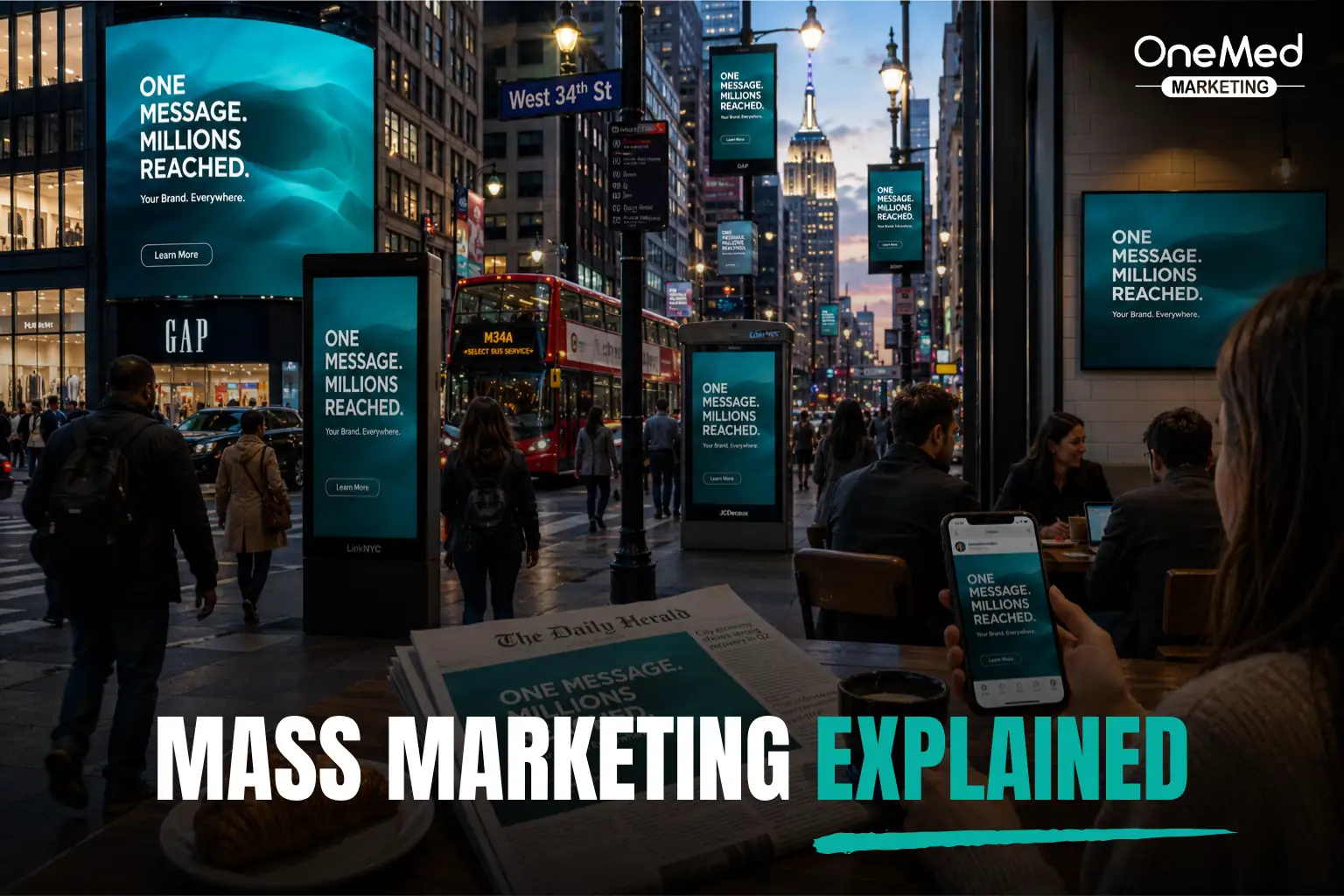
Mass marketing means promoting one message to a large group of people at the same time. It is not focused on one specific patient type, condition, location, or service need. The goal is simple: get the practice name in front of as many people as possible.
For a healthcare practice, this could be:
- A billboard near a busy road
- A radio ad for an urgent care clinic
- A newspaper ad for a new location
- A broad Facebook or Instagram campaign
- A general “Now Accepting New Patients” campaign
- A city-wide hospital awareness campaign
Mass marketing can help people remember your practice name. But it does not always bring quick appointments because many people who see the ad may not need care right now.
For example, a billboard saying “Quality Healthcare for Your Family” may build awareness, but it may not bring the same intent as someone searching “primary care doctor near me accepting new patients.”
That is why mass marketing works best for visibility, not direct patient conversion. It can be useful for new clinics, hospitals, urgent care centers, or multi-location practices that want more people in the area to know their name.
How Mass Marketing Works for Healthcare Practices?
Mass marketing works by sharing the same message with a large audience instead of targeting a small, specific group. The goal is to create visibility and make people remember the practice name.
For a healthcare practice, it usually works like this:
- One broad message is created for a large audience, such as “Now Accepting New Patients” or “Urgent Care Near You.”
- The message is placed on high-reach channels like billboards, radio, local newspapers, community ads, social media, or display ads.
- People see the message repeatedly over time, which helps build familiarity with the practice.
- Some people may not need care right away, but they may remember the practice later when they need a doctor, clinic, or urgent care service.
- The campaign works better when it connects to a clear next step, such as calling the office, visiting the website, searching the practice name, or booking an appointment.
For example, if an urgent care clinic runs a billboard campaign, the billboard may not make everyone book immediately. But when someone later needs same-day care, they may remember the clinic name and search for it online.
That is why mass marketing should not stand alone. The website, Google Business Profile, reviews, service pages, and appointment options should be ready before the campaign starts. Otherwise, people may remember the name but still fail to become patients.
Examples of Mass Marketing in Healthcare
Mass marketing in healthcare means sharing one clear message with a large group of people. The goal is to build local awareness, help people remember the practice name, and support future patient enquiries.
1. Billboard ads
A clinic may place a simple message on a busy road to reach people in the local area. This works well for urgent care centers, primary care clinics, new locations, or multi-location practices that want more visibility.
2. Local radio ads
A healthcare practice may use radio ads to promote walk-in care, same-day appointments, extended hours, or a new service. This can help reach a broad local audience during daily commutes.
3. Newspaper or magazine ads
Some practices still use local newspapers or community magazines to announce a new provider, new location, or new service line. This can work well when the target audience includes older patients or local families.
4. Direct mail postcards
A clinic may send postcards to homes in nearby ZIP codes with a clear message about new patient appointments, seasonal care, dental offers, wellness visits, or clinic openings.
5. Broad social media ads
A healthcare group may run Facebook or Instagram awareness ads across a city or region. These campaigns are not always aimed at immediate bookings, but they help more people become familiar with the practice.
6. Community sponsorships
A practice may sponsor a local health fair, school event, sports team, or charity program. This helps build trust and keeps the practice visible in the community.
7. Hospital awareness campaigns
Hospitals often use mass marketing to promote services like emergency care, maternity care, cardiology, cancer care, or orthopedic services across a wider area.
Benefits of Mass Marketing for Healthcare Practices
Mass marketing is not always the best choice for direct patient conversion, but it can be useful when a healthcare practice wants to build local visibility and stay familiar in the community.
1. Builds Local Brand Awareness
Mass marketing helps more people recognize the practice name. This is useful for new clinics, new locations, urgent care centers, hospitals, and multi-location healthcare groups that want to become known in a specific area.
2. Reaches a Large Audience Quickly
A billboard, radio ad, newspaper ad, or broad social media campaign can reach many people at once. This can help a practice introduce a service, promote a new provider, or announce that it is accepting new patients.
3. Supports Trust Through Familiarity
Patients often feel more comfortable choosing a healthcare provider they have seen or heard about before. Repeated exposure can make the practice feel more familiar when someone later needs care.
4. Helps Promote New Services or Locations
Mass marketing can work well when a practice is opening a new office, adding a new specialty, or launching a service that the local community should know about.
5. Strengthens Other Marketing Efforts
Mass marketing works better when it supports SEO, Google Business Profile, service pages, reviews, and appointment options. When someone sees an ad and later searches online, the practice should be easy to find and contact.
Limitations of Mass Marketing in Healthcare
Mass marketing can help healthcare practices build awareness, but it is not always the best way to bring ready-to-book patients. Since the message is broad, many people who see it may not need care at that moment.
1. It Reaches Many People Who Are Not Ready
A billboard, radio ad, or broad social media campaign may reach thousands of people, but only a small number may need your service right now. This can make results slower and harder to predict.
2. It Is Harder to Track Results
With mass marketing, it can be difficult to know exactly how many calls, form submissions, or appointments came from the campaign. This makes it harder to measure ROI clearly.
3. It Can Become Expensive
Mass marketing often needs repeated exposure to work. Billboards, print ads, radio spots, and large awareness campaigns can become costly, especially for small and mid-sized practices.
4. It May Not Bring High-Intent Patients
Someone who sees a general clinic ad may not be ready to book. A person searching online for “urgent care near me” or “primary care doctor accepting new patients” usually has stronger intent.
5. It Needs Strong Follow-Up Channels
Mass marketing works better when your website, Google Business Profile, reviews, phone number, and appointment options are ready. If patients search for you after seeing an ad and cannot find clear information, the campaign may lose impact.
6. It Can Feel Too Generic
Healthcare decisions are personal. A broad message like “Quality Care You Can Trust” may build awareness, but it may not answer the patient’s real concern, such as location, insurance, symptoms, appointment access, or provider expertise.
Mass Marketing vs Targeted Marketing
Mass marketing and targeted marketing both help healthcare practices reach people, but they do it in different ways. Mass marketing focuses on broad visibility, while targeted marketing focuses on reaching people who are more likely to need a specific service.
For healthcare practices, this difference matters because not every person who sees an ad is ready to book an appointment. A patient searching for a specific service, location, or provider usually has stronger intent than someone who simply sees a general awareness message. The table below shows how both approaches compare.
| Point | Mass Marketing | Targeted Marketing |
|---|---|---|
| Audience | Reaches a large group of people, even if many are not looking for care right now. | Reaches a specific group based on location, service need, condition, or search intent. |
| Message | Uses a broad message like “Now Accepting New Patients” or “Quality Care for Your Family.” | Uses a specific message like “Same-Day Urgent Care in Dallas” or “Back Pain Treatment Near You.” |
| Goal | Builds awareness and helps people remember the practice name. | Brings more relevant patient enquiries and appointment requests. |
| Intent level | Lower intent because many people may not need care at that moment. | Higher intent because people are often already searching for a provider or service. |
| Tracking | Harder to measure because results may come later or indirectly. | Easier to track through calls, forms, clicks, bookings, and campaign data. |
| Cost | Can be expensive because it needs repeated exposure to work. | More controlled because budget can be focused on specific services or locations. |
| Best for | Hospitals, urgent care centers, new locations, and broad community awareness. | Local SEO, paid search, service pages, retargeting, and patient acquisition. |
| Healthcare example | A billboard promoting a new clinic in the city. | A Google ad targeting “primary care doctor near me accepting new patients.” |
Is Mass Marketing Right for Your Healthcare Practice?
Mass marketing can be useful for some healthcare practices, but it is not the right fit for every situation. It works best when your goal is to build broad awareness, promote a new location, introduce a major service, or make your practice name more familiar in the community.
It may be a good option if:
- You are opening a new clinic or location.
- You want more people in the area to recognize your practice name.
- You are promoting urgent care, primary care, dental, chiropractic, or hospital services.
- You have the budget for repeated exposure through billboards, radio, print, or broad ads.
- Your website, Google Business Profile, reviews, and appointment options are already strong.
Mass marketing may not be the best first choice if your main goal is quick patient enquiries, lower cost per lead, or highly targeted appointment bookings. In that case, local SEO, service pages, paid search, review building, and targeted campaigns may bring better results.
For most healthcare practices, mass marketing should support a targeted strategy, not replace it. It can help people remember your name, but your website and local search presence must turn that attention into real patient actions.
Conclusion
Mass marketing can help healthcare practices build local awareness, but it should not be the only growth strategy. Getting people to recognize your name is useful, but patients still need clear services, strong reviews, an easy website, and a simple way to book.
For most practices, mass marketing works best when it supports targeted marketing. Use it to build visibility, then rely on SEO, service pages, Google Business Profile, and clear appointment options to turn that attention into real patient enquiries.