



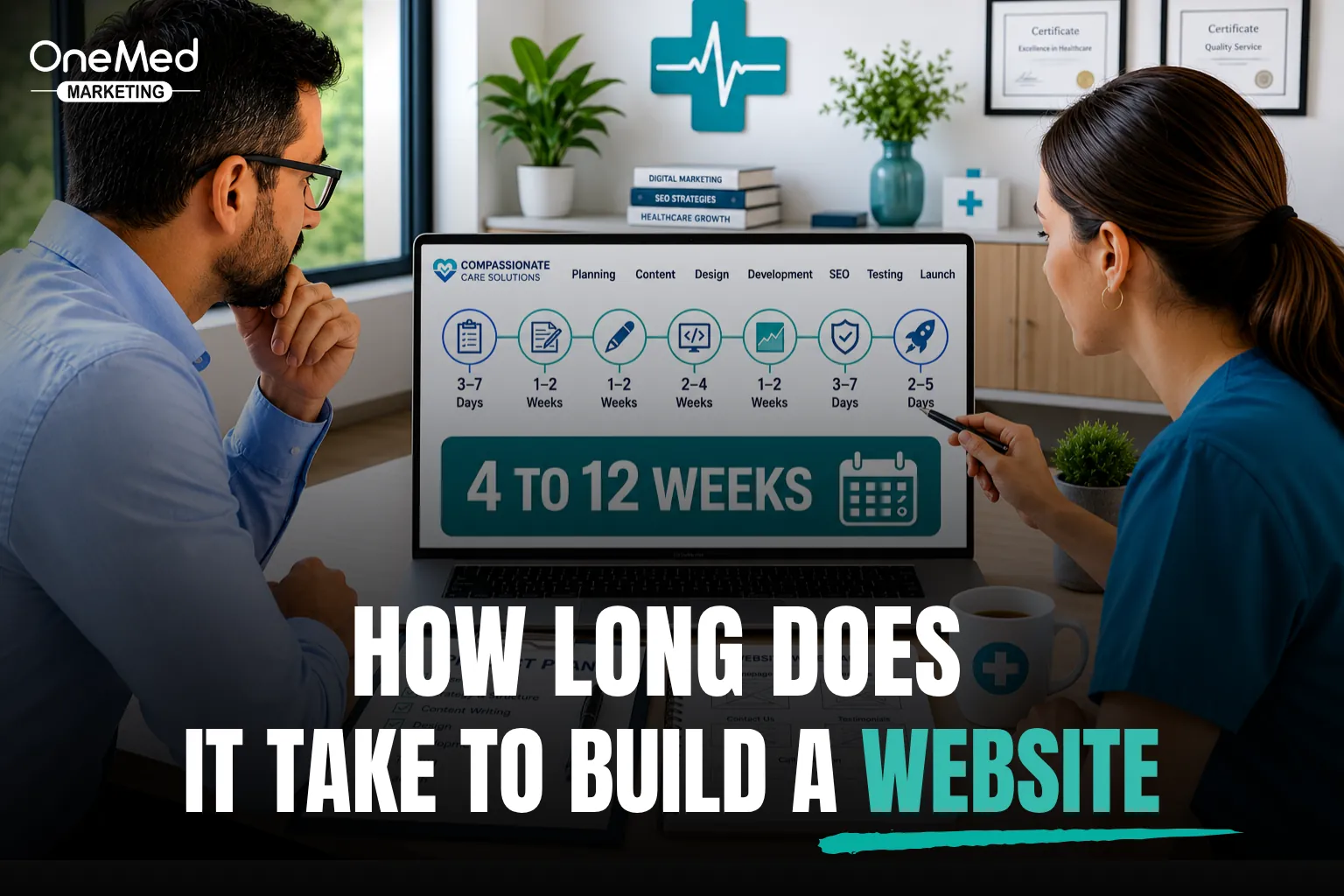


When a healthcare practice plans a new website, one of the first questions is simple: how long will it take? The honest answer is that there is no fixed number. A small clinic website may take fewer hours, while a custom healthcare website with service pages, provider profiles, patient forms, SEO, and compliance-focused features can take much longer.
In most cases, a healthcare website can take anywhere from 70 to 180 hours, depending on the size, design, content, features, and SEO work involved. But healthcare websites need more care than regular business websites. They deal with sensitive information, patient trust, appointment requests, service details, and sometimes protected health information.
That is why the process should follow proper healthcare website standards. Forms, content, privacy notices, security settings, accessibility, and user experience must be planned carefully. A rushed website may look fine on the surface, but it can create problems with trust, compliance, search visibility, and patient conversion.
Why Healthcare Website Build Time Varies So Much?
Healthcare website build time varies because every practice has different needs. A small clinic may need a simple website, while a larger healthcare group may need more pages, stronger SEO, provider profiles, secure forms, and extra review steps.
- More service pages, provider pages, location pages, and blog sections increase the total build time.
- If content, images, service details, and approvals are ready early, the website can move faster.
- A template-based layout takes less time, while a fully custom healthcare website needs more planning and design work.
- Healthcare websites often need service-specific pages, local SEO, metadata, internal links, schema, and technical SEO setup.
- Appointment forms, patient enquiry forms, and secure data handling require careful planning and testing.
- Healthcare websites need extra care with privacy, accessibility, content accuracy, and user trust.
- Delayed feedback from doctors, managers, legal teams, or marketing teams can slow down the project.
The more pages, features, compliance needs, SEO work, and review steps involved, the more hours it takes to build the website properly.
Average Hours to Build Different Types of Healthcare Websites
The hours needed to build a healthcare website depend on the size of the practice, the number of pages, the features required, and how much SEO, content, and compliance-focused work is included.
| Type of Healthcare Website | Estimated Hours | Best For |
|---|---|---|
| Basic healthcare practice website | 40 to 70 hours | Small clinics, solo providers, simple online presence |
| Professional healthcare website | 70 to 140 hours | Growing practices that need service pages, SEO, and stronger design |
| Multi-location healthcare website | 120 to 250 hours | Clinics with multiple locations, providers, and local SEO needs |
| Advanced healthcare website | 150 to 300 hours | Practices needing custom features, forms, integrations, and advanced SEO |
1. Basic Healthcare Practice Website
A basic healthcare website usually takes 40 to 70 hours. It may include a homepage, about page, contact page, a few service pages, basic appointment form, mobile-friendly design, and simple SEO setup. This works well for small clinics or solo providers that need a clean and professional online presence.
2. Professional Healthcare Website
A professional healthcare website usually takes 70 to 140 hours. This type of website includes stronger design, more detailed service pages, improved user experience, local SEO, content formatting, speed optimization, and better calls to action. It is better for practices that want to attract patients or generate more enquiries online.
3. Multi-Location Healthcare Website
A multi-location healthcare website usually takes 120 to 250 hours. These websites need location pages, provider profiles, specialty pages, local SEO setup, Google Business Profile alignment, and a clear structure so patients can find the right office, service, or provider.
4. Advanced Healthcare Website
An advanced healthcare website can take 150 to 300 hours or more, depending on the features. This may include patient forms, appointment request systems, CRM integration, resource libraries, advanced service pages, technical SEO, accessibility checks, and stronger security planning.
Healthcare Website Build Phases and Estimated Hours
To understand how many hours it takes to build a healthcare website, it helps to look at each stage of the process. Every phase takes time because healthcare websites need careful planning, accurate content, strong SEO, patient-friendly design, secure forms, and proper testing before launch.
1. Planning and Discovery (5 to 15 hours)
This phase sets the direction for the full website. For healthcare practices, planning is important because the site must speak to patients, support business goals, and follow the right privacy and trust standards. If this step is rushed, the team may need to redo pages, forms, content, or SEO structure later.
The planning and discovery phase usually includes:
- Practice goal alignment
- Target patient audience review
- Competitor website analysis
- Sitemap planning
- Service and location page planning
- Feature scoping
- SEO direction setting
- Form and compliance requirement review
Experienced healthcare website teams spend proper time here because it helps avoid delays during design, content, development, and launch.
2. UI and UX Design (15 to 50 hours)
Design time depends on how custom the healthcare website needs to be. A simple design takes less time, while a custom website needs more planning, layout work, mobile design, and revisions.
For healthcare websites, design is not only about how the site looks. It should help patients find services, understand the practice, trust the provider, and take action without confusion.
Core design activities usually include:
- Wireframe development
- Homepage layout design
- Service page layout design
- Provider profile layout planning
- Mobile layout planning
- Patient journey mapping
- Appointment CTA placement
- Brand consistency checks
- Accessibility-friendly design review
Good healthcare UX makes it easier for visitors to book an appointment, call the practice, submit a form, or find the right provider or location.
3. Website Development (25 to 120 hours)
Development is often the most time-consuming phase. This is where the approved design becomes a working website. The hours can increase if the site needs custom forms, provider directories, location pages, appointment request features, or third-party integrations.
Development work usually includes:
- Front-end implementation
- CMS setup
- Responsive coding
- Appointment form setup
- Patient enquiry form validation
- Provider profile setup
- Location page setup
- Speed optimization
- Basic security configuration
- Privacy and consent-related setup
- Accessibility checks during build
For healthcare websites, development must be handled carefully because forms, page structure, performance, and trust signals can affect both patient experience and lead conversion.
4. Content Integration (10 to 40 hours)
Content can speed up or delay the full project. If the practice provides final content, provider details, service information, images, and contact details early, the website moves faster. If content is missing or unclear, this stage can slow down.
Content integration usually includes:
- Page content upload
- Service content formatting
- Provider bio upload
- Location details placement
- Image optimization and placement
- Internal linking
- Readability formatting
- Metadata insertion
- CTA placement
- Privacy and disclaimer content placement
Healthcare content should be clear, accurate, and easy for patients to understand. It should explain services in simple language while still supporting SEO and patient trust.
5. SEO Implementation (8 to 25 hours)
For healthcare websites, SEO should not be added at the end. It should be planned from the beginning so the site has the right structure, keywords, page hierarchy, and local visibility.
Core healthcare SEO setup usually includes:
- Title tag and meta description setup
- Heading hierarchy optimization
- Service keyword alignment
- Local SEO setup
- Location page optimization
- Provider page optimization
- Schema markup
- Internal linking
- Image alt text
- Technical health checks
- XML sitemap generation
- Google Search Console setup
Strong SEO helps the website appear for relevant searches, such as services, treatments, specialties, provider names, and location-based patient searches.
6. Testing and Launch (5 to 15 hours)
Testing is very important for healthcare websites because even small errors can hurt trust. A broken form, slow page, missing phone number, or poor mobile layout can cause patients to leave.
Before launch, testing usually includes:
- Mobile responsiveness checks
- Speed validation
- Form submission testing
- Appointment request testing
- Phone number and CTA testing
- Cross-browser review
- Broken link checks
- Basic security review
- Accessibility review
- Sitemap and indexing checks
- Final deployment
Rushing this stage can create avoidable post-launch problems. A proper launch process helps make sure the healthcare website is fast, functional, patient-friendly, and ready for search engines.
How to Speed Up a Healthcare Website Build?
A healthcare website can be completed faster when the practice is prepared before the project starts. Most delays happen because content, approvals, service details, images, or technical requirements are not ready on time.
- Prepare content early - Finalize service details, provider bios, location information, images, phone numbers, and appointment instructions before development begins.
- Finalize the website scope upfront - Decide how many pages, forms, features, locations, and service sections are needed before the build starts.
- Work with a healthcare-focused team - A team that understands patient behavior, healthcare SEO, accessibility, privacy needs, and medical service pages can move faster with fewer revisions.
- Keep approvals simple - Too many decision-makers can slow the project. Assign one main person to review content, design, and feedback.
- Limit unnecessary design changes - Clear feedback during the design stage helps avoid repeated revisions and delays.
- Plan SEO from the beginning - Adding SEO after the site is built can create extra work. Page structure, keywords, metadata, internal links, and schema should be planned early.
- Use clear forms and simple patient paths - Appointment forms, contact forms, and enquiry forms should be simple, tested, and easy for patients to use.
- Review compliance and privacy needs early - Privacy notices, form handling, accessibility, and security requirements should be discussed before development starts.
The faster the practice provides clear information and approvals, the smoother the website build becomes. Preparation saves time, reduces rework, and helps the final website launch with fewer issues.