Every business owner wants more leads, but the real question is where the marketing budget should go first: SEO or paid ads?
Both can help your business get found online, but they work in very different ways. Paid ads can put your business in front of potential customers quickly, but you need to keep paying to stay visible. SEO takes more time, but it helps your website build long-term visibility in Google search without paying for every click.
The right choice depends on your business stage, budget, competition, website quality, and how quickly you need results. A new business may need paid ads for fast traffic, while an established business may benefit more from SEO to reduce long-term dependence on ad spend.
In this blog, we will break down the practical difference between SEO and paid ads, when each one works better, how much they can cost, and how business owners can decide which strategy makes the most sense for growth.
Should You Choose SEO or Paid Ads?
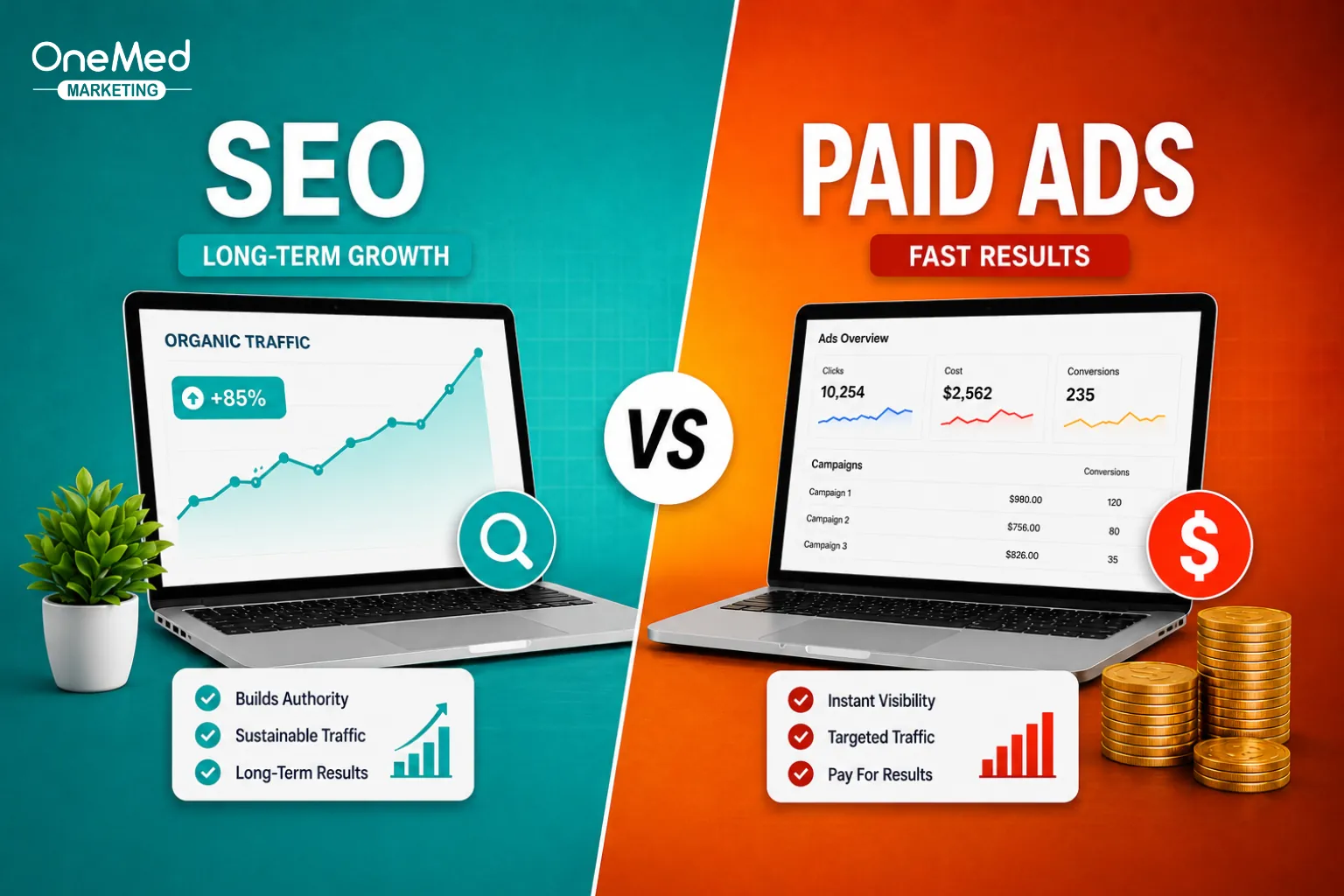
The simple answer is: choose paid ads if you need leads fast, and choose SEO if you want long-term growth.
But for most businesses, the best decision is not choosing one forever. SEO and paid ads work best when they are used for different goals.
Paid ads are useful when you want quick visibility. Your business can appear in front of people searching for your service within a short time, but the results depend on your budget. Once you stop spending, the traffic usually stops too.
SEO takes longer, but it builds a stronger online foundation. When your website pages start ranking for the right keywords, you can keep getting traffic and leads without paying for every single click.
What Is SEO?
SEO, or Search Engine Optimization, is the process of improving your website so it can appear higher in Google’s organic search results when people search for your products or services.
For a business owner, SEO is not just about ranking keywords. It is about making sure the right people can find your business when they are already looking for what you offer.
For example, if someone searches:
“website design company near me”
“best digital marketing agency for small business”
“SEO services for local businesses”
SEO helps your website show up naturally without paying for each click.
What Are Paid Ads?
Paid ads are online advertisements where a business pays to appear in front of potential customers. These ads can appear on Google, Facebook, Instagram, LinkedIn, YouTube, and other platforms.
For example, when someone searches on Google and sees results marked as “Sponsored,” those are paid ads. The business is paying to appear there.
Paid ads usually work like this:
- You choose your target audience or keywords
- You set a daily or monthly budget
- You create ad copy and visuals
- You send users to a landing page or website
- You pay for clicks, impressions, or leads
- You track calls, forms, bookings, or purchases
SEO vs Paid Ads: Main Difference
The main difference between SEO and paid ads is how your business gets visibility.
SEO helps your website appear in organic Google results over time. Paid ads help your business appear quickly by paying for placement. Both can bring leads, but the cost, timeline, and long-term value are different.
| Factor | SEO | Paid Ads |
|---|---|---|
| Result speed | Takes time to build | Can start quickly |
| Cost model | You invest in website, content, and optimization | You pay for clicks, impressions, or leads |
| Traffic duration | Can continue even after the page ranks | Usually stops when the budget stops |
| Trust factor | Often feels more natural and credible to users | Clearly shown as sponsored or promoted |
| Control | Less control over exact ranking time | More control over targeting, budget, and location |
| Best use | Long-term visibility and steady lead flow | Fast traffic, testing, and urgent campaigns |
| Risk | Results take time and need consistency | Budget can be wasted if targeting or landing page is weak |
| Long-term value | Builds a marketing asset | Works as long as spending continues |
For example, if a business wants to make inquiries this week, paid ads may be the faster option. But if the same business wants to build search visibility for the next 6 to 12 months, SEO is the stronger long-term strategy.
Paid ads are like renting visibility. You can appear quickly, but you keep paying to stay there. SEO is like building visibility. It takes longer, but once your website starts ranking, it can continue bringing traffic without paying for every click.
When SEO Is the Better Choice?
SEO is the better choice when your business wants long-term visibility, trust, and consistent website traffic without paying for every click.
It works best when people are already searching for your service on Google and your business wants to appear in front of them naturally. For example, if someone searches for “website design company,” “SEO agency near me,” or “digital marketing services for small business,” SEO helps your website show up in those organic results.
SEO is a better choice when:
- Your business wants steady leads over time
- You want to reduce dependency on monthly ad spend
- Your customers search for your services on Google
- You already have a website but it is not ranking well
- You want to build trust before people contact you
- You have time to wait for long-term results
- You want your service pages and blogs to keep working in the background
For many small businesses, SEO becomes valuable because it builds a marketing asset. A well-optimized service page or blog can keep bringing traffic long after it is published, as long as it stays relevant and competitive.
But SEO needs patience. It is not the best option if you need leads immediately this week. It works better when the business owner is thinking about sustainable growth over the next few months and years.
When Paid Ads Are the Better Choice?
Paid ads are the better choice when your business needs faster visibility, quick traffic, or immediate lead generation.
Unlike SEO, paid ads do not need months to start showing results. Once the campaign is live and approved, your business can appear in front of the selected audience or search terms. This makes paid ads useful when speed matters.
Paid ads are a better choice when:
- You need leads quickly
- Your website is new and has no Google rankings
- You are launching a new service or offer
- You want to promote a limited-time campaign
- You want to test which service gets more inquiries
- You are entering a competitive market
- You want to target a specific location, audience, or keyword quickly
For example, if a new business wants calls this month, paid ads can create faster exposure while SEO is still building in the background.
But paid ads need careful management. A weak landing page, poor targeting, unclear offer, or broad keywords can waste money quickly. Paid ads may bring traffic fast, but traffic alone does not guarantee leads.
That is why paid ads work best when the website or landing page is already built to convert visitors into calls, form submissions, or bookings.
Cost Comparison: SEO vs Paid Ads
The real cost difference between SEO and paid ads is this: SEO costs money to build visibility, while paid ads cost money to buy visibility.
With SEO, you usually pay for people, tools, content, and website improvements. With paid ads, you pay for every click, lead, impression, or campaign result.
| Cost Area | SEO Cost | Paid Ads Cost |
|---|---|---|
| Expert/team cost | SEO specialist, agency, content writer, developer | PPC specialist or ads agency |
| Tools | SEO tools like Ahrefs, Semrush, keyword tracking, audit tools | Ad platforms, tracking tools, landing page tools |
| Website work | Technical SEO, speed fixes, service pages, blog pages | Landing page design, conversion tracking, call tracking |
| Content | Blogs, service pages, location pages, content updates | Ad copy, creatives, offer testing |
| Traffic cost | No direct payment for each organic click | You pay per click, lead, impression, or conversion |
| Ongoing cost | Monthly SEO work and updates | Monthly ad spend plus management fee |
| What happens if you stop? | Rankings may continue for some time if pages are strong | Traffic usually stops when ads stop |
In real business terms, SEO is not free. A business may need to hire an SEO expert, pay a monthly agency fee, use SEO tools, create content, fix technical website issues, and update pages regularly.
SEO tools can also add cost. For example, Ahrefs Standard is listed at around $249 per month or $208 per month when billed annually, and tools like Semrush, Moz, SpyFu, and others may add separate monthly costs depending on the plan.
Paid ads work differently. You may still pay an expert or agency to manage the campaign, but the biggest cost is usually the ad spend itself. On Google Ads, your business may pay every time someone clicks on your ad. On Meta or LinkedIn, you may pay based on impressions, clicks, leads, or campaign objectives.
For example, if your average cost per click is $5 and you want 1,000 visitors, your ad spend could be around $5,000, before adding management fees, landing page cost, or tracking setup.
But even after spending that amount, there is no guarantee that those visitors will become paying customers. Some may only click and leave. Some may submit an inquiry but never respond. Some may compare prices and choose another company.
That is why paid ads should not be measured only by traffic. The real question is:
How many of those clicks turn into qualified inquiries, and how many of those inquiries turn into actual business?
If the landing page, offer, targeting, or follow-up process is weak, the business may spend thousands of dollars and still get very few real customers.
Common Mistakes Business Owners Make
Many businesses do not fail with SEO or paid ads because the channel is bad. They fail because the strategy, website, tracking, or follow-up process is weak.
Here are the most common mistakes business owners make.
1. Running Paid Ads Without a Proper Landing Page
Sending paid traffic to a weak homepage is one of the biggest mistakes.
A visitor clicks the ad, lands on a page, and still does not understand:
- What you offer
- Why they should trust you
- What problem you solve
- What action they should take next
If the landing page is confusing, slow, or poorly written, the business may pay for clicks but get very few inquiries.
2. Measuring Paid Ads Only by Clicks
Clicks do not mean business.
A campaign may get 1,000 clicks, but that does not mean those clicks will become customers. Some visitors may leave quickly. Some may submit low-quality inquiries. Some may compare your price and choose another provider.
The real numbers to track are:
- Cost per lead
- Lead quality
- Conversion rate
- Booked calls
- Actual customers
- Revenue from the campaign
3. Expecting SEO Results Too Quickly
SEO does not usually work in a few days or weeks. It takes time for Google to crawl, understand, trust, and rank your pages.
Many business owners stop SEO too early because they do not see instant leads. But SEO needs consistent work on content, service pages, technical fixes, backlinks, local visibility, and website quality.
Stopping too early often means the business pays for the setup but does not wait long enough to see the return.
4. Doing SEO Without Strong Service Pages
Blogs alone are not enough.
If your website does not have strong service pages, visitors may read your content but still not convert. A service page should clearly explain what you offer, who it is for, why your company is credible, and how someone can contact you. This is where working with an SEO agency can help, because good SEO should improve both rankings and conversions.
For example, if you offer website design, SEO, or social media marketing, each service should have a dedicated page. Otherwise, your SEO traffic may not turn into leads.
5. Choosing Broad Keywords Instead of Buyer-Intent Keywords
Many businesses target keywords that bring traffic but not customers.
For example:
“what is SEO” may bring learners
“SEO services for small business” may bring buyers
The second keyword has stronger business intent.
SEO and paid ads both perform better when the keywords match what potential customers are actually searching before making a decision.
6. Ignoring Website Speed and Mobile Experience
Both SEO and paid ads depend on website quality.
If your website is slow, broken on mobile, or difficult to use, users may leave before contacting you. This can hurt SEO performance and also waste paid ad budget.
Before spending heavily on marketing, the website should load fast, look professional, and make it easy to call, submit a form, or book a consultation.
7. Not Tracking Calls, Forms, and Conversions
Many business owners spend money on marketing but do not know what is working.
They may know how much they spent, but not:
- Which keyword brought the lead
- Which page converted
- Which ad generated calls
- Which campaign created real business
Without proper tracking, decisions are based on guesswork.
8. Depending Only on Paid Ads
Paid ads are useful, but depending only on them can become risky.
If ad costs increase, competition gets stronger, or the budget stops, lead flow can drop quickly. That is why SEO is important for building long-term visibility and reducing full dependency on paid traffic.
9. Doing SEO Without Updating Content
SEO is not a one-time task.
Pages need updates, competitors publish new content, Google changes results, and customer search behavior changes over time. If your content becomes outdated, rankings and traffic can slowly decline.
Regular updates help keep the website relevant and competitive.
10. Not Following Up Properly With Leads
Even a good SEO or paid ads campaign can fail if the business does not follow up properly.
If a lead fills out a form and nobody responds quickly, that lead may go to a competitor. Marketing brings the opportunity, but sales follow-up turns that opportunity into business.
The biggest mistake is thinking traffic alone will grow the business. SEO and paid ads can bring visitors, but the website, offer, tracking, and follow-up process decide how many of those visitors become real customers.
Conclusion
There is no one-size-fits-all answer between SEO and paid ads.
Choose paid ads if your business needs quick visibility, fast traffic, or inquiries in the short term. But remember, every click costs money, and inquiries are not guaranteed to become customers.
Choose SEO if you want to build long-term visibility, trust, and a steady flow of traffic without paying for every visitor. It takes time, but it can reduce your dependency on monthly ad spend.
The smarter decision is to use paid ads for speed and SEO for stability. Start with what your business needs right now, but build SEO in the background so your growth does not depend only on paid traffic.